

Thurisaz


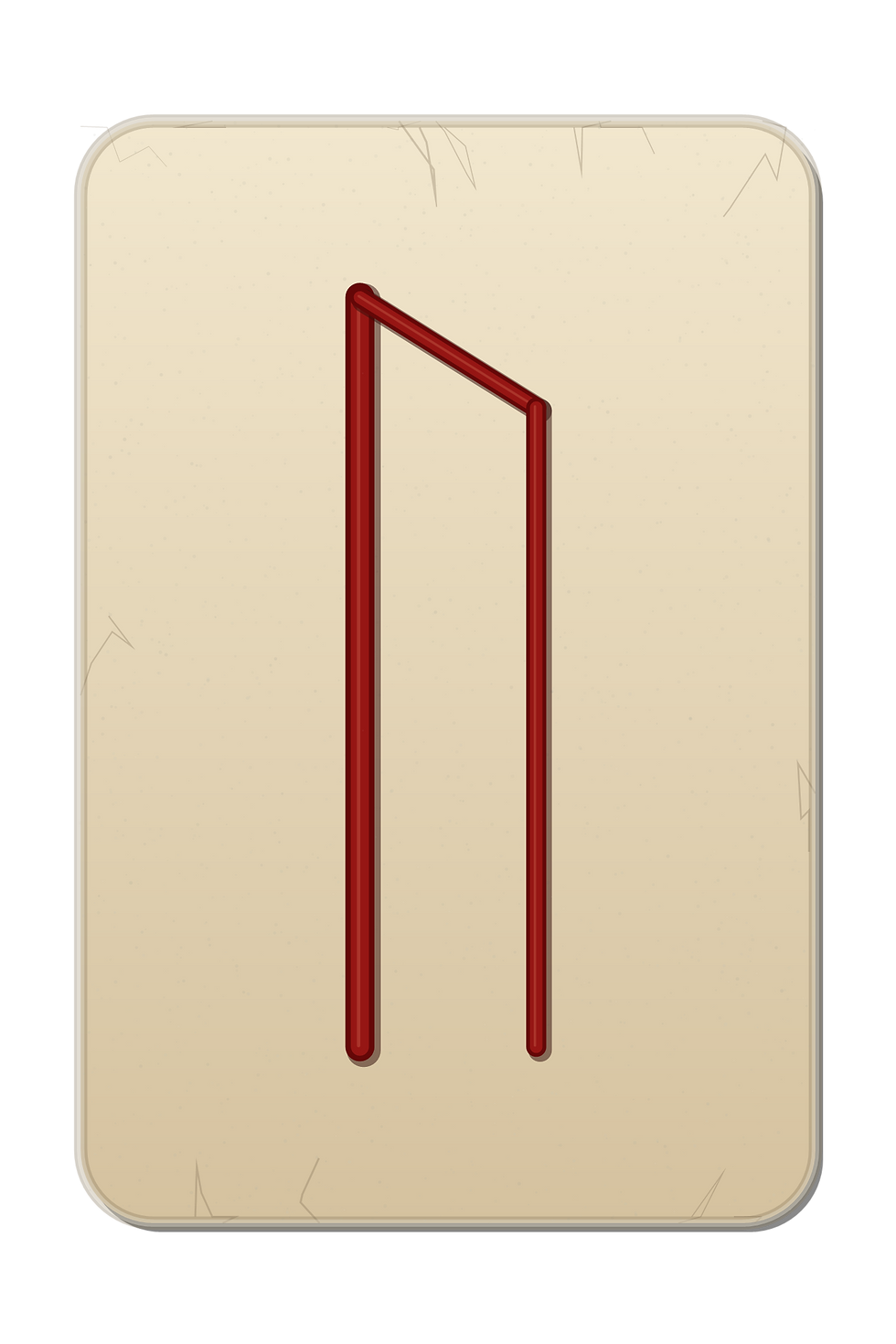
Thurisaz is the third rune of the Elder Futhark and one common interpretation is thorn. Given its shape, the meaning feels very literal. The Old English Rune Poem's stanza, from Edred Thorsson's Runecaster's Handbook, for this rune is:
Thorn is very sharp; for every thane who grasps it; it is harmful, and is exceedingly cruel to every man who lies upon them.
The Old Norwegian Rune Rhyme and the Old Icelandic Rune Poem for Thurisaz don't mention thorn at all, but instead the rune is interpreted to mean giant, in the Norse mythology sense of the word. I personally find the Old English Rune Poem more true for me in my practice.
Thurisaz's stanza above refers to thanes, feudal lords or free men in service to a lord in Anglo-Saxon culture. I've also seen this translated as warrior. An analog to yesterday's thane could be today's middle manager. Yesterday's lord is today's executive. This, to me, makes Thurisaz's rune poem one that fits well into modern-day contexts.
We could interpret thorns as literal thorns, but that misses the point of the rune. The rune poem talks about thorns as danger for those reaching for them, holding them, lying among them. To me, thorns are danger, risk, lurking in something one desires. It is the price of plucking a rose. Especially with the reference to thanes, I see Thurisaz's rune poem as a warning about reaching too far and getting caught in someone's defense. Valuable things are often guarded jealously.
This defensive, reactive interpretation threads through how I read Thurisaz as well. While there are other interpretations tying back to the Norse and Icelandic roots, the first thing that comes to mind for this rune is defense.
That defensiveness is less "I'll protect myself" and more "I'll stand my ground and deal with police afterward." Thurisaz carries a weight of disproportionate response. The line must be crossed first, but once it is, everything is fair game. This can be the defensiveness of someone who ends a relationship over a small fight or humiliating someone who offered a mild critique. It can also be the defensiveness of someone who insists that their boundaries be respected at all times, regardless of their own actions.
When I see Thurisaz in a reading, I have three questions: What am I protecting myself from? Is my defensiveness warranted? Is my response proportional? That defensiveness can be physical or emotional, social or political. The point is less about the nature of the protection than its correct application. The other runes and Thurisaz's position in the reading will give context to that defense. They can also help determine if the threat is real and present or a reaction to an old transgression. Even looking at Thurisaz's murk side, it usually speaks more to a lack of appropriate defense for the situation than a true reversal in meaning: unexpected dangers or betrayal. Thurisaz's shadow is the threat that you're not prepared for.
As with all runes, look also to Thurisaz's relationship to runes in its aett or row: Fehu, Uruz, Ansuz, Raidho, Kenaz, Gebo, and Wunjo. Within my reading practice, I also consider patterns created by runes occupying corresponding positions in the other aettir: Isa and Ehwaz. These patterns can clarify Thurisaz's thorns and protective measures. Isa can bring icy stasis or self-control to Thurisaz's response to a threat. Ehwaz's teamwork can be combined with Thurisaz's defensiveness to either foster group protection, like a cohesive military unit, or an unruly mob.
Thurisaz is about not only thorns, but also how we protect ourselves from them. Are we reacting appropriately to a perceived risk? Are there risks we fail to see because of our situation? That is the context a reading supplies.

Comments